bg_image

Drogo Commodities Ltd., sources and exports the finest conventional and certified Robusta and Arabica (washed and natural) coffee from all of the country's major growing regions. Uganda’s natural coffee is famous to the world market and given that we take great pride in our ability to comprehend the dynamics and requirements of business-to-business customers, we would like to promote to you a broader awareness of this celebrated coffees’ origin. Presently, we export green coffee for the overseas markets. Furthermore we have always been compatible with demands and quality required by our estemeed customers.

img
Products For Export

Arabica

Arabica beans in the foothills of Mount Elgon and Mount Rwenzori. These coffees are smooth and full-bodied with fruity, chocolaty and spicy undertones. The Natural Arabica, commonly referred to as Drugar (DRy UGanda ARabica), is described as sweet with dark berry fruity notes and low acidity

  • Time to Blossom: 7-9 Months
  • Taste: Sweeter & Softer
  • Caffeine: 0, 8% - 1,5%
Order Online
img
Products For Export

Robusta

The “Pearl of Africa” is famous for Robusta coffee, brimming with a bold flavor and high caffeine content. These beans thrive in the lowland regions full of rich volcanic soils, high humidity and abundant rainfall.

  • Time to Blossom: 9-11 Months
  • Taste: Stonger & Harsh
  • Caffeine: 1, 7% - 3,5%
  • Uses: Often used in instant coffees and espresso blends

Order Online
Arabica & Robusta

Our coffee varieties

Drogo Commodities exports two coffee varieties. These are the two popular types grown in Uganda, in the Rwenzori Mountains, Mount Elgon and West Nile region, and it is very encouraging that the quality of Uganda's coffee is getting better and better. Let's take a look at Arabica and Robusta together with us.

The Lake Victoria Basin is the primary growing region for Robusta coffee, which is derived from the coffee canephora plant. Compared to coffee derived from coffee arabica, it is renowned for having a high level of bitterness and a low level of acidity. Compared to Robusta beans, Arabica beans, which are found between 200 and 800 meters above sea level, typically grow at greater elevations. Because it produces more attainable product per area than arabica and because harvesting its coffee beans costs significantly less than that of arabica, its output is also more robust. Another benefit is that the Robusta strain of the plant is probably more resilient to plant diseases and wilts, making it a less dangerous crop to depend on. Due to its high bitterness is examined to be less popular on the global market in parallel to arabica.

Mostly, Robusta is sun-dried, although in this recent years there have been moderate attempts to reintroduce the wet-processing. These kinds of interventions are on-going today, which is under the aegis of the UCDA.

The two varieties of robusta that are grown in Uganda are called “Nganda” and “Erecta.” High-yielding, vegetatively propagated, self-sterile clones of both kinds are combined in a comprehensive clonal replanting scheme. The offspring are true to type and may maintain the traits of their parents, which include high yielding, accelerated maturation, and the production of larger beans with better liquor qualities. They also frequently exhibit resistance to the disease known as coffee leaf rust.

Uganda Robusta had an intrinsic quality that always been excellent and the on-going replanting program which is locally developed in a clonal material that is likely to result in a general revival of the country’s ability to supply goods, and neutral liquoring coffee. Robusta in Uganda is grown at relatively high altitudes, some as high as 1,500 meters, making these coffees especially attractive for the fast-growing espresso industry. However, the bulk of the Robusta can be used in the production of instant coffees and which is as inexpensive fillers for blends.

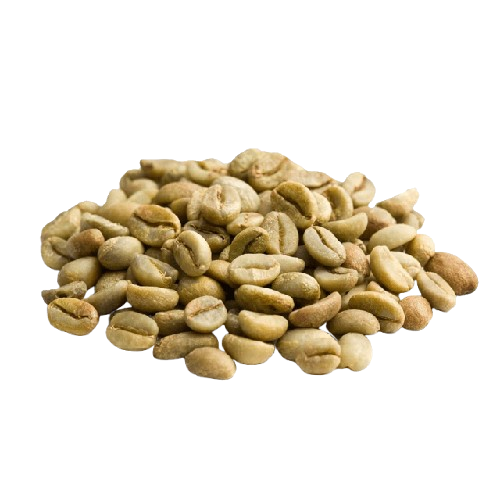
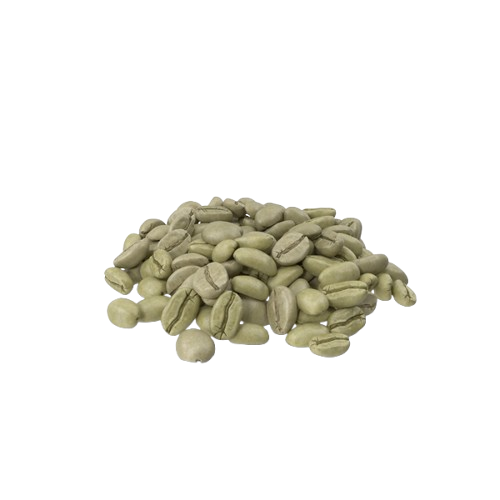
Arabica coffee beans have an elliptical shape, a groove in the middle of the bean has a wavy shape.
The green color of Arabica coffee has a slightly gray color.
Arabica is consistent with the highest grade due to it’s great demand. Our product, which is grown in one of Uganda’s most productive locations, has a distinct flavour that sets it apart from the competition. Furthermore, one of the reasons why our consumers adore our product is its unique chocolate-like aroma, which reflects the climate and surroundings of the Uganda highland region.

Submit your order instantly.

We know exactly where our coffee beans are harvested, processed, dried and sorted

What is Processing

In its most basic form, coffee is a fruit. On trees, coffee beans develop within fruits that resemble cherries. These coffee cherries have pits, just like other cherries. Typically, there are two seeds—the coffee beans—in each pit. The coffee beans are separated from the cherries after they have been harvested. Coffee cherries have multiple layers, including pulp, pectin, parchment, silver skin, and outer skin, making this process more intricate than it first appears. In order to acquire coffee beans, farmers must thus remove these layers. We refer to this process as processing.

There are various approaches available for processing coffee. One of the most popular methods is washed, or wet, processing. The fruit must be taken out before it dries. This is a detailed explanation of how washing processing operates.

To separate the ripe and unripe coffee cherries, they are first gathered and submerged in floating water. Good coffee, which is ripe, will sink to the bottom, while bad coffee, which is unripe, will float to the top.

Removing the cherry’s skin or pulp is the next step. After the mature cherries are placed in a de-pulping machine, the seeds, also known as coffee beans, are extracted.

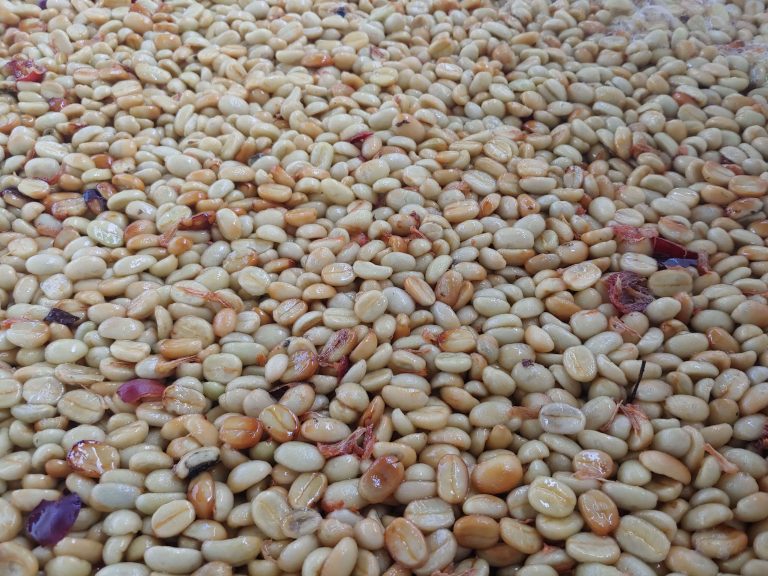
The seeds move through a channel into a large water tank. If any seeds float to the top of the water, they’ll be removed. The coffee seeds are left in the water tank for about 18-24 hours. However, this duration can fluctuate depending on various factors, including the temperature, country, and local processes. During fermentation, microorganisms in the seeds create enzymes that break down the seeds’ mucilage, which is a pasty substance responsible for the coffee’s delicious flavor.

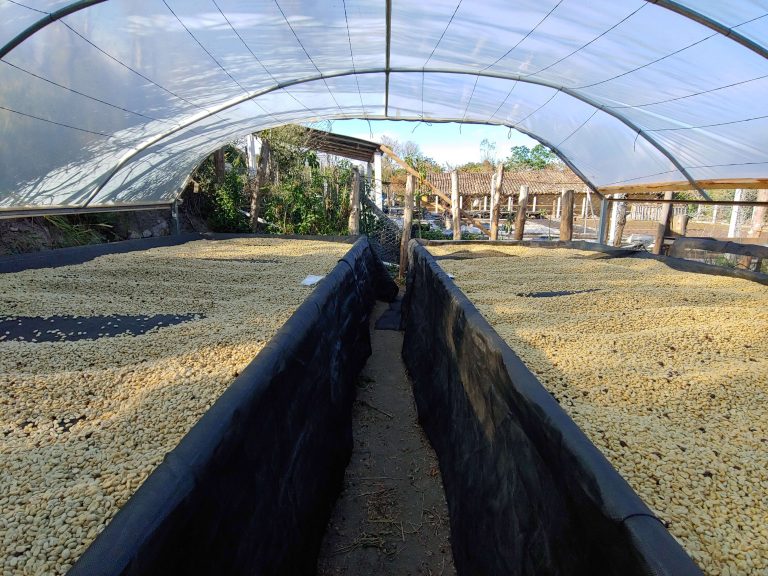
Once fermentation is complete, the seeds are taken out of the water tanks and left to dry. Smaller farms tend to dry seeds under the sun, while larger farms use mechanical dryers. A combination of the two can occur, as well. Whatever drying method is used, the seeds are dried to a moisture content between 10-12%.